
// Documenti disponibili n: 46.403
// Documenti scaricati n: 36.359.130

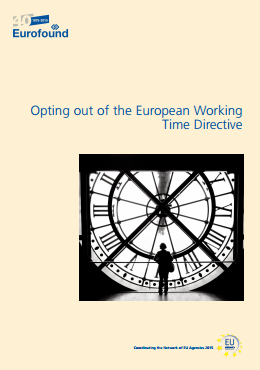
The European Working Time Directive lays down minimum safety and health requirements for the organisation of working time in the EU by, for example, establishing that all workers have the right to a limit to weekly working time of 48 hours. However, it also contains the possibility for Member States to allow for the opting out of that maximum as long as the individual workers agree.
This report looks at how the Member States make use of the possibility of opting out, the extent of its use and its main impacts.
Although national data about its use are scarce, the opt-out and long working hours continue to be the subject of heated debates involving governments and social partners across the EU. According to the research currently available, there are strong reasons to think that the limitation of working time is beneficial for everyone, including workers, employers, patients and clients
European Commission
2015

Lavoratore intrappolato all'interno della macchina fustellatrice non protetta
Penale Sent. Sez. 4 Num. 1103 Anno 2022
Presidente: FERRANTI DONATELLA
R...

ID 20837 | 24.11.2023
INAIL, Comunicato 23 novembre 2023 - Infortuni sul lavoro, nel 2022 accertati oltre 1.600 casi di violenza contro...

INAIL, 2020
In seguito al divieto di utilizzazione dell’amianto, tra i materiali sostitutivi, le fibre artificiali vetrose (FAV) rappresentano il gruppo commercialmente più uti...
Testata editoriale iscritta al n. 22/2024 del registro periodici della cancelleria del Tribunale di Perugia in data 19.11.2024