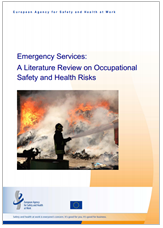
A literature review on occupational safety and health risks
Emergency workers comprise large professional groups ranging from career and volunteer fire-fighters, police officers, emergency medical staff (paramedics, emergency medical technicians, doctors and nurses) to psychologists.
In major disasters, rescue workers, technicians from large relief organisations, additional medical staff, military personnel, antiterrorist forces, body handlers, clean-up workers, construction workers, and numerous volunteers are involved.
Depending on the emergency/disaster site, emergency workers need specialisation for instance in water rescue, mountain rescue or rescue from heights.
Current environmental, economic, and political developments and trend data all suggest an increase in the severity and frequency of disasters in the future.
Phenomena that support this assumption include increased energy use, progressive global warming, climate change and pollution, population growth, dispersal of industrialisation around the globe, expansion of transportation facilities, and the growing spread of terrorism.
The growing issue of better protection for emergency workers against the occupational safety and health (OSH) risks has been emphasised as a priority by many experts.The demands made upon emergency workers, as well as OSH risks they are exposed to, will rise as they are confronted with events greater in both number and severity
Allegati
|
Descrizione |
Lingua |
Dimensioni |
Downloads |
 |
|
EN |
1365 kB |
2611 |