
~ 2000 / 2026 ~
// Documenti disponibili n: 46.835
// Documenti scaricati n: 37.162.847
// Documenti disponibili n: 46.835
// Documenti scaricati n: 37.162.847


















This guide is designed to outline potential strategies airlines may wish to consider to reduce the risks associated with the transport of lithium batteries.
These strategies address the carriage of lithium batteries as cargo on passenger and cargo aircraft as well as in passenger and crew checked and carry-on baggage.
The strategies are primarily directed at an airline’s internal processes and procedures, although there are strategies for [...]
This guidance document is intended to assist mining and metals companies in meeting the demands of new marine transport regulations including:
- International Convention for the Prevention of Pollution from Ships (MARPOL) - Annex V
- International Maritime Solid Bulk Cargoes Code (IMSBC)
- International Maritime Dangerous Goods Code (IMDG).
In this guidance ICMM sets out the approach that leading mining and metals commodity associations have developed in collaboration with scientific experts from research institutes around [...]
The numbered boxes of the form for the certificate of approval for vehicles carrying dangerous goods for which the model is shown in 9.1.3.5 should be filled in as follows.
It shall be drawn up in the language or one of the languages of the country issuing it. If that language is not English, French or German, the title of the certificate of approval and any remarks under No.
Il volume è la traduzione, in lingua italiana, della pubblicazione dell’Agenzia Internazionale dell’Energia Atomica (AIEA) “Regulations for the Safe Transport of Radioactive Material” 2012 Edition, No. SSR-6 e costituisce l’aggiornamento dell’Edizione 2009 della stessa pubblicazione.
L’edizione 2012 della Regolamentazione IAEA No. SSR-6 è inserita nelle vigenti edizioni dei regolamenti internazionali per il trasporto stradale (ADR), ferroviario (RID), acque [...]
Con l’uscita dell’ADR 2013 - direttiva 45/2012/UE che adegua al progresso scientifico e tecnologico gli allegati della direttiva 2008/68/CE del Parlamento europeo e del Consiglio relativa al trasporto interno di merci pericolose” - si sono apportate modifiche rispetto alla precedente edizione.
Già a partire dall’ADR 1999 era stato introdotto l’obbligo, per le aziende, di addestrare il personale diverso dai conducenti e coinvolto nel [...]

Following the events of September 11 2001, international legislators considered it necessary to develop and implement measures regarding security for the transportation of goods by road, rail and inland waterways against possible terrorist risks.
On the basis of relevant UN recommendations security provisions – as opposed to classic safety provisions – have been listed in a new ADR Chapter 1.10 and address all parties involved in [...]
Guidelines Security ADR Cap. 1.10
Industry Guidelines for the Security of the Transport of Dangerous Goods by Road
Security measures should be an integral part of the safety and quality management system of
every company involved with the transport of dangerous goods.
The general requirements of ADR Chapter 1.10 are mandatory. However, the specific ways they are addressed will depend upon the individual circumstances of the undertakings in a particular transport chain and their assessment of the risks and possible outcomes.
For example,
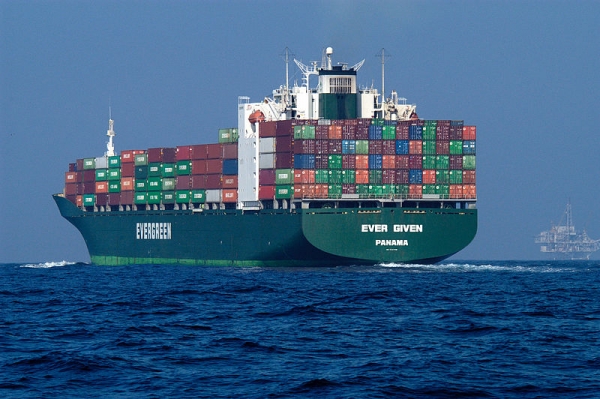
1 Introduction
1.1 The history of the container
1.2 Container flows
1.3 Maritime transport of containers
1.3.1 Container-carrying vessels
1.3.1.1 Part 1
1.3.1.2 Part 2
1.3.2 Positioning and securing of containers on board
1.3.3 Container stowage plans
1.4 Containers and insurance
1.4.1 General
1.4.2 Containers and cargo insurance
1.4.3 Containers and container & hull insurance
1.4.4 Liability of transport company
1.4.4.1 Container provided by shipper
1.4.4.2 Container provided by carrier
1.5 Responsibility for packing
2 Causes of damage/loss during transport
2.1 Loss prevention through training
2.2 Damage - risks - countermeasures
2.3 Shipping stresses - general information
2.3.1 [...]
Ed. 5a Amendment 2
The Manual of Tests and Criteria contains criteria, test methods and procedures to be used for classification of dangerous goods according to the provisions of Parts 2 and 3 of the United Nations Recommendations on the Transport of Dangerous Goods, Model Regulations, as well as of chemicals presenting physical hazards according to the Globally Harmonized System of Classification and Labelling of Chemicals (GHS).
As [...]
La nuova rubrica UN 3509 (Classe 9 - D.S. 663) è stata introdotta con l’ADR 2015.
Tale rubrica, modificherà in modo rilevante l'aspetto degli "imballaggi di scarto" che abbiano contenuto merci pericolose, tale sì, eventualmente, da individuarsi anche negli imballaggi-rifiuto.
La nuova identificazione è la seguente:
UN 3509, IMBALLAGGI DI SCARTO, VUOTI, NON RIPULITI, 9.
Nel Documento di Trasporto la dicitura corretta dovrà essere completata dalla classe(i) e rischio sussidiario(i) corrispondente ai [...]
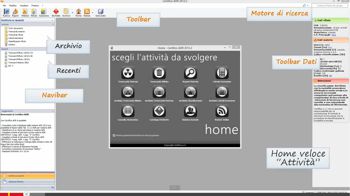
Modello Istruzioni scritte Cap. 5.4.3 + Pagina 0 di Informazioni Preliminari (P.0)
Adotta il nostro modello di "Istruzione di Sicurezza in 4 pagine" previste dall'ADR 2013 + Pagina 0 "P.0" di INFORMAZIONI PRELIMINARI, dove possono essere sono riportate:
- le eventuali Indicazioni Supplementari (Pagina 3 Nota 2 Istruzioni Scritte ADR)
- Altre informazioni da fornire sull'incidente e sulle materie coinvolte (Pagina 1 Istruzioni Scritte ADR)
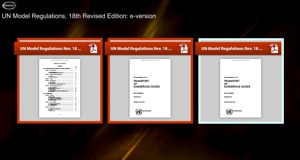
UN Recommendations on the Transport of Dangerous Goods
Model Regulations 18a revised edition
Table of contents
Volume I (Recommendations, Parts 1 to 3, Dangerous Goods List, Appendices and Alphabetical Index)
Volume II (Parts 4 to 7 and Table of Correspondence)
Part 1: General provisions, definitions, training and security
Part 2: Classification
Part 3: Dangerous goods list, special provisions and exceptions
Corrigendum 1
Corrigendum 2
Appendices
Alphabetical index of substances and articles
Part 4: Packing and tank provisions
Part 5: Consignment procedures
Part 6: Requirements for the construction and testing of packagings,
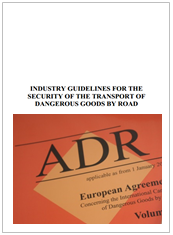
These guidelines provide a list of practical options on how a company can meet the requirements of the Chapter 1.10 on Security Provisions in ADR 2013.
They are the result of a cooperation between 11 industry associations, which represent a large part of manufacturing, transport, distribution and forwarding industries, involved in the transport of dangerous goods.
These Guidelines have been designed to provide as comprehensive a range of [...]
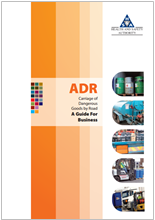
A Guide For Business
This guide for business is geared towards businesses that are involved in the consignment, loading/unloading and carriage of dangerous goods by road.
Dangerous goods are substances and articles which have been identified as hazardous for transport and present a risk to people, property and the environment.
The guide has been arranged to provide a comprehensive summary of the legal provisions of the ADR (European Agreement Concerning the International Carriage of Dangerous [...]
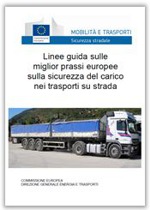
ID 953 | 22.08.2014 / In allegato
Quando si trasporta un carico, fissarlo in modo adeguato permette di evitare danni al veicolo e lesioni ai passeggeri o ad altri utenti della strada, e di evitare ingorghi dovuti alla perdita del carico.
Il carico non assicurato adeguatamente può cadere, sbilanciare il veicolo e a volte può perfino farlo rovesciare e urtare altri veicoli.
Il 25% degli incidenti che coinvolgono autocarri è dovuto ad un inadeguato fissaggio [...]

L'accordo multilaterale M268 e l'ADR 2015
Su iniziativa francese è stato sottoscritto nel Dicembre 2013, in deroga dall'ADR - 1.5.1, l’Accordo Multilaterale M268 inerente gli imballaggi di scarto a cui hanno aderito, ad oggi, i paesi:
France 3/12/2013
Belgium 11/12/2013
Spain 20/12/2013
Netherlands 19/12/2013
Germany 7/03/2014
Switzerland 24/03/2014
Portugal 12/06/2014
L’accordo non è ad oggi stato sottoscritto dall'Italia.
L’accordo M268 anticipa l’applicabilità della nuova rubrica UN 3509 (Classe 9 - Disposizione speciale [...]
The European Agreement Concerning the International Carriage of Dangerous Goods by Road (ADR), done in Geneva on 30 September 1957, entered into force on 29 January 1968 in accordance with its article 7.
On 1 August 2013, there were 48 Contracting Parties to ADR:
Albania,
Andorra,
Austria,
Azerbaijan,
Belarus,
Belgium,
Bosnia and Herzegovina,
Bulgaria,
Croatia,
Cyprus,
Czech Republic,
Denmark,
Estonia,
Finland,
France,
Germany,
Greece,
Hungary,
Iceland,
Ireland,
Italy,
Kazakhstan,
Latvia,
Liechtenstein,
Lithuania,
Luxembourg,
Malta,
Montenegro,
Morocco,
ID 905 | 09.08.2014
A Guidebook for First Responders During the Initial Phase of a Dangerous Goods/Hazardous Materials Transportation Incident
The Emergency Response Guidebook: A Guidebook for First Responders During the Initial Phase of a Dangerous Goods/Hazardous Materials Transportation Incident (ERG) is used by emergency response personnel (such as firefighters, and police officers) in Canada, Mexico, and the United States when responding to a transportation emergency involving hazardous materials.
First responders in Argentina, Brazil, and Colombia [...]
ID 867 | 28.07.2014
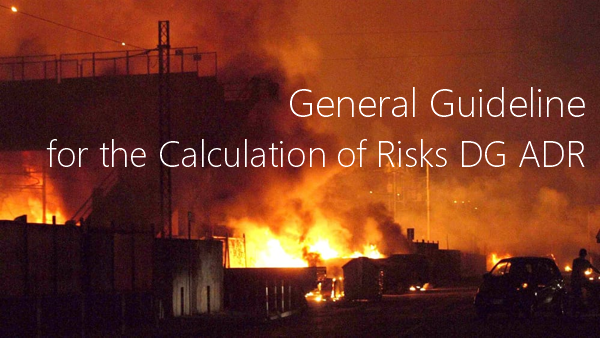
An introduction to the basic principles of risk assessment for chapter 1.9 ADR
Document adopted at the 84th and 85th sessions of the Working Party on the Transport of Dangerous Goods (WP.15) in May and October 2008.
Contents
1. Introduction
1.1 Background
1.2 Guideline Objectives and Application
2. Basic Definitions and Requirements
2.1 Definition of Technical Terms
2.2 Basic parameters3. Risk Analysis
3.1 Introduction
3.2 Scenario Definition
3.3 Statistical [...]

Circolare MIT 25692 del 13/09/2011
Si informano codesti Uffici che l’Italia ha sottoscritto gli Accordi Multilaterali M235 e M240.
Gli Accordi summenzionati, di cui si allega copia, prevedono deroghe per il trasporto su strada di merci pericolose.
Gli Accordi multilaterali di cui sopra sono finalizzati a risolvere le difficoltà iniziali correlate alla nuova classificazione degli oli combustibili.
Infatti a seguito della recente riclassificazione effettuata dal CONCAWE secondo i criteri della Direttiva 67/548/CEE e del Regolamento n.
Trasporto di alcuni rifiuti contenenti merci pericolose (Sezione 1.5 ADR)
Ai sensi del cap. 1.5 dell'ADR, il 14 gennaio 2011 l’Italia ha aderito all’Accordo Multilaterale M222 per il trasporto di rifiuti contenenti merci pericolose che prevede alcune importanti deroghe alle disposizioni ADR.
In allegato:
- Accordo Multilaterale M222 - ITA
- Allegato
- Circolare Prot. 4617 del 09/02/2011 Ministero delle infrastrutture e dei Trasporti
L'accordo scade il 2 Agosto 2015.

Il 18 Luglio 2013: l’Italia ha sottoscritto l’accordo multilaterale M260
Accordo multilaterale M260 conformemente alla sezione 1.5.1 dell’allegato A dell‘ADR concernente imballaggi e container contenenti sostanze che durante ii trasporto comportano il rischio di asfissia
(1) In deroga alle disposizioni delle sottosezioni 5.5.3.6 e 5.5.3.7 dell‘ADR, i colli e i container contenenti sostanze che durante ii trasporto comportano il rischio di asfissia devono soddisfare le disposizioni di seguito:
(2) Le sottosezioni 5.5.3.6 e 5.5.3.7 si applicano [...]

ID 872 | 30.07.2014
Olio combustibile in cisterna in accordo con la sezione 1.5.1 di ADR (deroghe temporanee)
Per quanto riguarda il trasporto di olio combustibile, pesante, e olio combustibile, residuo
1) In deroga alle disposizioni di cui alla colonna (12) e (14) della Tabella A del capitolo 3.2 dell'ADR,
a) olio combustibile, pesante, quando deve essere assegnato a uno
- UN 3082 MATERIA PERICOLOSA, LIQUIDA, NAS, classe 9, codice [...]

Pile o batterie al litio danneggiate o difettose
In data 30 Ottobre 2013 l’Italia ha sottoscritto l’Accordo Multilaterale M259.
Accordo multilaterale M259 ai sensi della sezione 1.5.1 ADR concernente il trasporto di pile o batterie al litio danneggiate o difettose:
UN 3090
UN 3091
UN 3480
UN 3481
L’Accordo multilaterale è valido fino al 31 dicembre 2014 per il trasporto sui territori di quelle ADR Parti contraenti firmatarie del presente accordo.
Riportiamo l’Accordo e la traduzione ITA
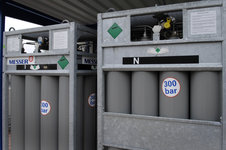
Marcatura di pacchi di bombole
In data 30 Ottobre 2013 l’Italia ha sottoscritto l’Accordo Multilaterale M264.
Accordo multilaterale M264 ai sensi della sezione 1.5.1 ADR Allegato A, concernente la marcatura di pacchi di bombole.
L’Accordo multilaterale è valido fino al 31 dicembre 2014 per il trasporto sui territori di quelle ADR Parti contraenti firmatarie del presente accordo.
Riportiamo l’Accordo e la traduzione ITA non ufficiale.
European Agreement concerning the International Carriage of Dangerous Goods by Inland Waterways
The European Agreement concerning the International Carriage of Dangerous Goods by Inland Waterways (ADN) done at Geneva on 26 May 2000 under the auspices of the United Nations Economic Commission for Europe (UNECE) and the Central Commission for Navigation on the Rhine (CCNR) has been in force since February 2008. The Agreement currently has [...]
Recommendations on the Transport of Dangerous Goods – Manual of Tests and Criteria - Fifth revised edition.
The Manual of Tests and Criteria contains criteria, test methods and procedures to be used for classification of dangerous goods according to the provisions of Parts 2 and 3 of the Model Regulations, as well as of chemicals presenting physical hazards according to the Globally Harmonized System of Classification and Labelling of Chemicals.
Languages:
General Guideline for the Calculation of Risks in the Transport of Dangerous Goods by RoadAn introduction to the basic principles of risk assessment for chapter 1.9 ADR
Document adopted at the 84th and 85th sessions of the Working Party on the Transport of Dangerous Goods (WP.15) in May and October 2008.
ID 6521 | Rev. 2.0 del 12.05.2022 / Documento completo allegato
Con l'ADR 2019 l'obbligo di nomina del Consu...
IATA presenta nel suo Regolamento DGR una Checklist che costituisce il modello impiegato da tutte le compagnie aeree assoc...
ID 19987 | 15.07.2023
Contents
I – Introduction to Eurotunnel’s dangerous goods policy
II – Definition of terms used
III – List of dangerous goods accepted
Class ...












Testata editoriale iscritta al n. 22/2024 del registro periodici della cancelleria del Tribunale di Perugia in data 19.11.2024