Safe Use of Ladders and Stepladders: A brief guide
ID 17427 | 23.08.2022
This guidance is for employers on the simple, sensible precautions they should take to keep people safe when using portable leaning ladders and stepladders in the workplace.
It will also be useful for employees and their representatives. Following this guidance helps you to comply with health and safety law, but you are free to take other action.
The law calls for a sensible, proportionate approach to managing risk. Further guidance on how to decide whether a ladder is the right type of equipment for a particular task is also provided in Working at height: A brief guide (see Further reading).
References to ladders in this leaflet, unless otherwise indicated, are to types of portable leaning ladders and stepladders, and the guidance applies to both. More specific requirements that apply only to a certain type of ladder are covered in detail under the relevant headings.
Guidance document LA455
[...]
Leaning ladders
When using a leaning ladder to carry out a task:
- only carry light materials and tools – read the manufacturer’s labels on the ladder and assess the risks;
- don’t overreach – make sure your belt buckle (or navel) stays within the stiles;
- make sure the ladder is long enough or high enough for the task;
- don’t overload the ladder – consider your weight and the equipment or materials you are carrying before working at height;
- check the pictogram or label on the ladder for any advisory information;
- make sure the ladder angle is at 75° – you should use the 1-in-4 rule (ie one unit out for every four units up – see Figure 1).
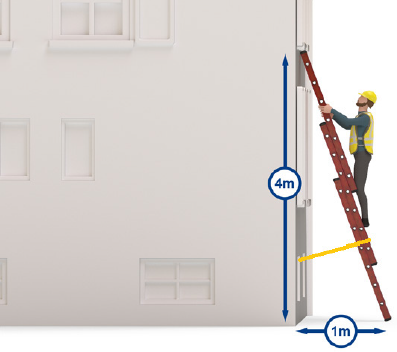
Figure 1 Ladder showing the correct 1 in 4 angle
- always grip the ladder and face the ladder rungs while climbing or descending – don’t slide down the stiles;
- don’t try to move or extend the ladder while standing on the rungs;
- don’t work off the top three rungs, and try to make sure that the ladder extends at least 1 m (three rungs) above where you are working;
- don’t stand ladders on movable objects, such as pallets, bricks, lift trucks, tower scaffolds, excavator buckets, vans or mobile elevating work platforms;
- avoid holding items when climbing (consider using a tool belt);
- don’t work within 6 m horizontally of any overhead power line, unless it has been made dead or it is protected with insulation. Use a non-conductive ladder (eg fibreglass or timber) for any electrical work;
- maintain three points of contact when climbing and wherever possible at the work position – see Figures 2 and 3.
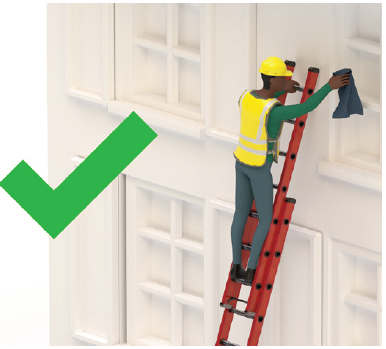
Figure 2 Correct – user maintaining three points of contact
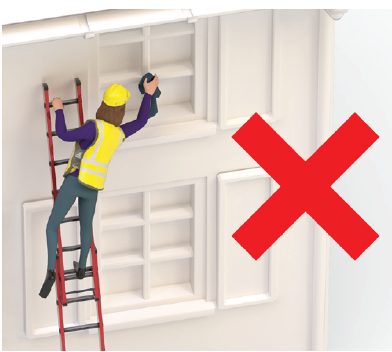
Figure 3 Incorrect – overreaching and not maintaining three points of contact
[...] segue in allegato
Fonte: HSE Health and Safety Executive
Ladder Association
Collegati
Allegati
|
Descrizione |
Lingua |
Dimensioni |
Downloads |
 |
Abbonati Sicurezza Lavoro
|
EN |
1856 kB |
21 |