
~ 2000 / 2026 ~
// Documenti disponibili n:
49.636
// Documenti scaricati n:
42.962.680
// Newsletter n:
4725

















Featured
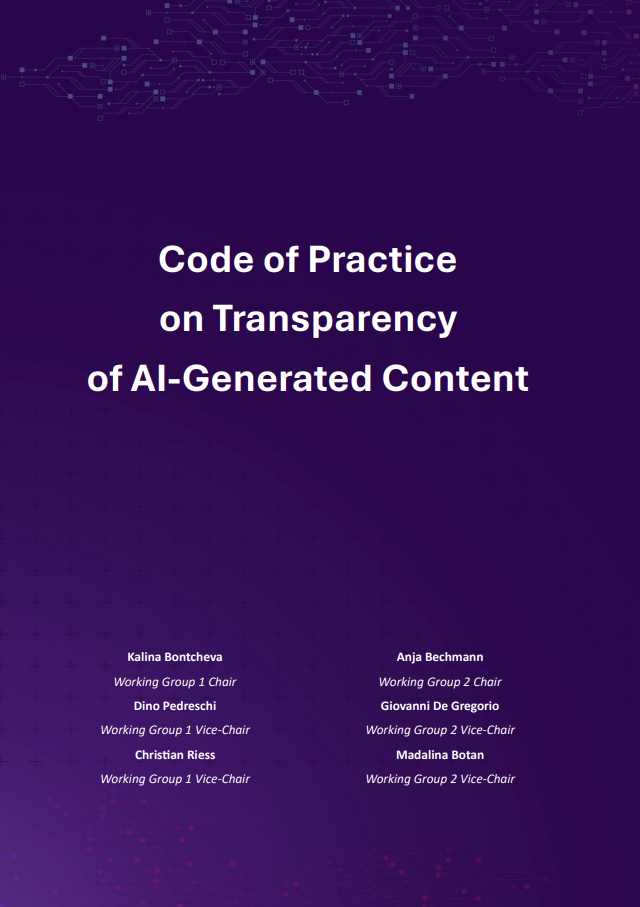
Code of Practice on Transparency of AI-Generated Content
Code of Practice on Transparency of AI-Generated Content / Obligations that will apply from 2 August 2026
ID 26486 | 18 Giugno 2026 / Allegati
The Code is voluntary and sets out practical steps to help providers and deployers of generative artificial intelligence (AI) systems meet the AI Act (Regulation EU 2024/1689) transparency obligations that will apply from 2 August 2026.
From that date, the AI Act will require clear labelling in key cases. Deepfakes and AI-generated or AI-manipulated text published on matters of public interest must be clearly labelled. Users must also be informed when they are interacting with an interactive AI system, such as a chatbot. These transparency requirements help people recognise when content has been generated or altered by AI, reducing the risk of deception and manipulation.
Regolamento EU 2024/1689 (Dal 2 Agosto 2026)
Articolo 50 (Obblighi di trasparenza per i fornitori e i deployers di determinati sistemi di IA)
1. I fornitori garantiscono che i sistemi di IA destinati a interagire direttamente con le persone fisiche sono progettati e sviluppati in modo tale che le persone fisiche interessate siano informate del fatto di stare interagendo con un sistema di IA, a meno che ciò non risulti evidente dal punto di vista di una persona fisica ragionevolmente informata, attenta e avveduta, tenendo conto delle circostanze e del contesto di utilizzo. Tale obbligo non si applica ai sistemi di IA autorizzati dalla legge per accertare, prevenire, indagare o perseguire reati, fatte salve le tutele adeguate per i diritti e le libertà dei terzi, a meno che tali sistemi non siano a disposizione del pubblico per segnalare un reato.
2. I fornitori di sistemi di IA, compresi i sistemi di IA per finalità generali, che generano contenuti audio, immagine, video o testuali sintetici, garantiscono che gli output del sistema di IA siano marcati in un formato leggibile meccanicamente e rilevabili come generati o manipolati artificialmente. I fornitori garantiscono che le loro soluzioni tecniche siano efficaci, interoperabili, solide e affidabili nella misura in cui ciò sia tecnicamente possibile, tenendo conto delle specificità e dei limiti dei vari tipi di contenuti, dei costi di attuazione e dello stato dell'arte generalmente riconosciuto, come eventualmente indicato nelle pertinenti norme tecniche. Tale obbligo non si applica se i sistemi di IA svolgono una funzione di assistenza per l'editing standard o non modificano in modo sostanziale i dati di input forniti dal deployer o la rispettiva semantica, o se autorizzati dalla legge ad accertare, prevenire, indagare o perseguire reati. (*)
3. I deployer di un sistema di riconoscimento delle emozioni o di un sistema di categorizzazione biometrica informano le persone fisiche che vi sono esposte in merito al funzionamento del sistema e trattano i dati personali in conformità dei regolamenti (UE) 2016/679 e (UE) 2018/1725 e della direttiva (UE) 2016/680, a seconda dei casi. Tale obbligo non si applica ai sistemi di IA utilizzati per la categorizzazione biometrica e il riconoscimento delle emozioni autorizzati dalla legge per accertare, prevenire o indagare reati, fatte salve le tutele adeguate per i diritti e le libertà dei terzi e conformemente al diritto dell'Unione.
4. I deployer di un sistema di IA che genera o manipola immagini o contenuti audio o video che costituiscono un «deep fake» rendono noto che il contenuto è stato generato o manipolato artificialmente. Tale obbligo non si applica se l'uso è autorizzato dalla legge per accertare, prevenire, indagare o perseguire reati. Qualora il contenuto faccia parte di un'analoga opera o di un programma manifestamente artistici, creativi, satirici o fittizi, gli obblighi di trasparenza di cui al presente paragrafo si limitano all'obbligo di rivelare l'esistenza di tali contenuti generati o manipolati in modo adeguato, senza ostacolare l'esposizione o il godimento dell'opera.
I deployer di un sistema di IA che genera o manipola testo pubblicato allo scopo di informare il pubblico su questioni di interesse pubblico rendono noto che il testo è stato generato o manipolato artificialmente. Tale obbligo non si applica se l'uso è autorizzato dalla legge per accertare, prevenire, indagare o perseguire reati o se il contenuto generato dall'IA è stato sottoposto a un processo di revisione umana o di controllo editoriale e una persona fisica o giuridica detiene la responsabilità editoriale della pubblicazione del contenuto.
5. Le informazioni di cui ai paragrafi da 1 a 4 sono fornite alle persone fisiche interessate in maniera chiara e distinguibile al più tardi al momento della prima interazione o esposizione. Le informazioni devono essere conformi ai requisiti di accessibilità applicabili.
...
(*) I fornitori di sistemi di IA, compresi i sistemi di IA per finalità generali, che generano contenuti audio, immagine, video o testuali sintetici, immessi sul mercato prima del 2 agosto 2026, adottano le misure necessarie per conformarsi all'articolo 50, paragrafo 2, entro il 2 dicembre 2026. (introduzione all'Art. 111 dell'AI Act del p. 4 - vedasi Pacchetto Ominibus AI Act)
__________
Code of Practice on Transparency of AI-Generated Content
The Code of Practice on transparency of AI-generated content was drawn up by independent experts in a multi-stakeholder process facilitated by the AI Office. It helps providers and deployers of generative AI systems to comply with the AI Act’s obligations for labelling and marking of AI-generated content - Article 50(2),(4) and (5) of the AI Act. Even though adherence to the code is voluntary, the transparency requirements under article 50 of the AI Act are legal obligations.
The Code of Practice on transparency of AI-generated content (PDF) has 2 sections:
Section 1: Providers - Rules for marking and detection of AI-generated and manipulated content
Section 2: Deployers - Rules for labelling of deepfakes and AI-generated and manipulated text
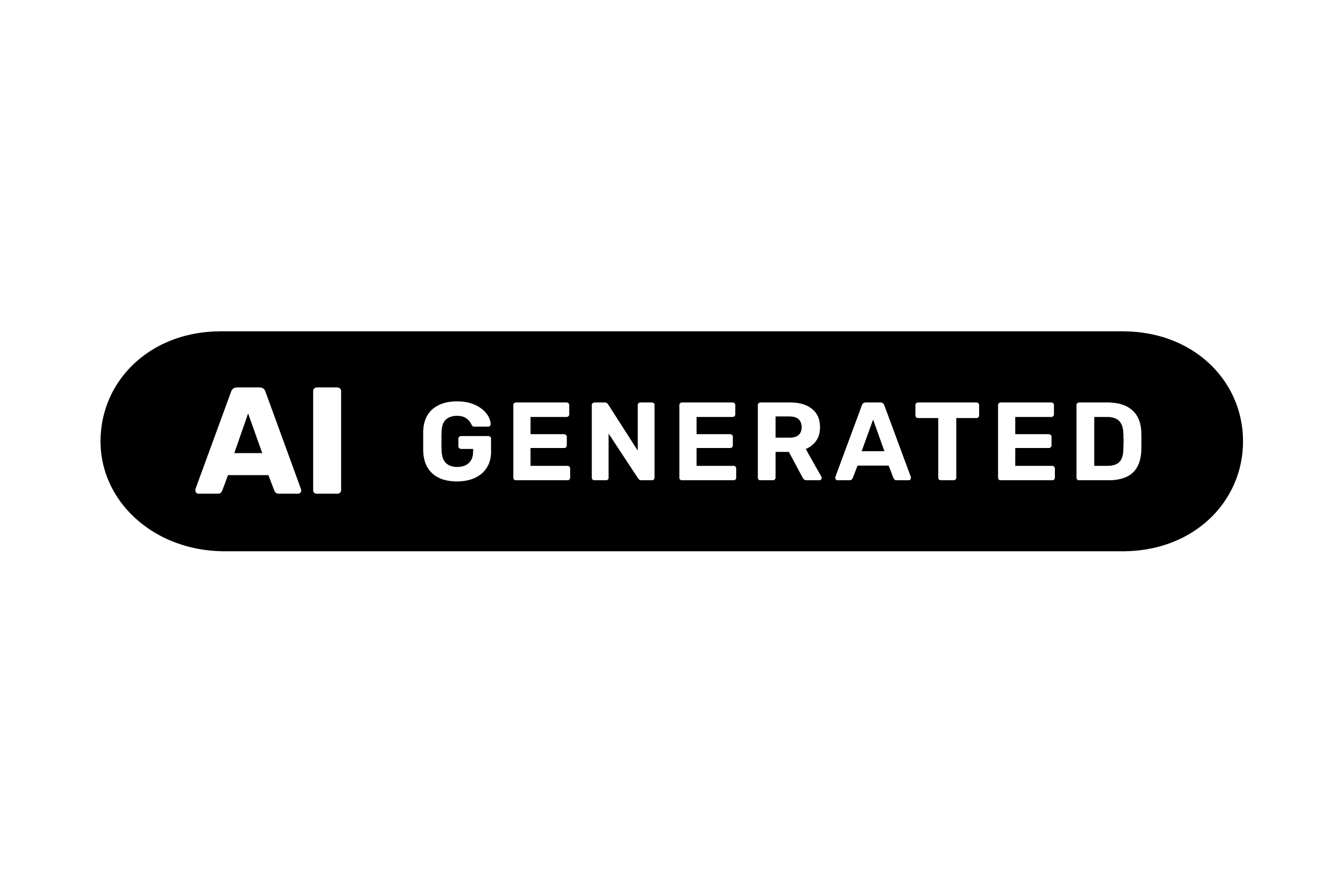
The EU has also created a set of icons that deployers of generative AI systems may use to label their AI-generated content.
The code, published on 10 June 2026, is currently undergoing an adequacy assessed by the Commission and the AI Board. It will be complemented by Commission guidelines on the scope of the transparency obligations laid down in Article 50 of the AI Act.
_________
EU Icons for labelling AI-generated content
Deployers of generative AI systems can use the EU set of icons to label certain AI-generated content, in accordance with the AI Act transparency rules.
The EU has developed a set of icons that creators, publishers and other deployers of generative AI systems may use to label their AI-generated content. These icons are freely available and a integral part of Section 2 of the Code of Practice on marking and labelling of AI-generated content.
What content needs to be labelled as AI-generated or manipulated?
The icons are intended to help natural persons exposed to such content to recognise, in a clear and distinguishable manner, that the content has been artificially generated or manipulated. This obligation supports public trust, reduces the risk of misinformation and the informed viewing and reading by natural persons of all sorts of content.
Not all AI-generated or manipulated content needs to be labelled. The disclosure requirement under the AI Act covers only AI-generated or manipulated content. The icons support compliance with Article 50(4) of the AI Act, which requires deployers of AI systems to disclose:
- Deep fakes - AI-generated or manipulated image, audio, or video content that resembles existing persons, objects, places, entities or events and would falsely appear to a person to be authentic or truthful.
- AI-generated or manipulated text published to inform the public on matters of public interest, which did not undergo human review or editorial control and where editorial responsibility was not assumed by any legal or natural person.
Limitations and exceptions
Evidently artistic, creative, satirical, fictional and analogous works
Where deep fake content forms part of an evidently artistic, creative, satirical, fictional or analogous work or programme, the transparency obligations are limited to disclosure in an appropriate manner that does not hamper the display or enjoyment of the work.
Authorised by law
The disclosure obligation does not apply where the use of deepfakes or published text on matters of public interest is authorised by law to detect, prevent, investigate or prosecute criminal offences.
Human review or editorial control for text
The disclosure obligation does not apply where the AI-generated text has undergone a process of human review or editorial control and where a natural or legal person holds editorial responsibility for the publication of the content.
________
The EU icons
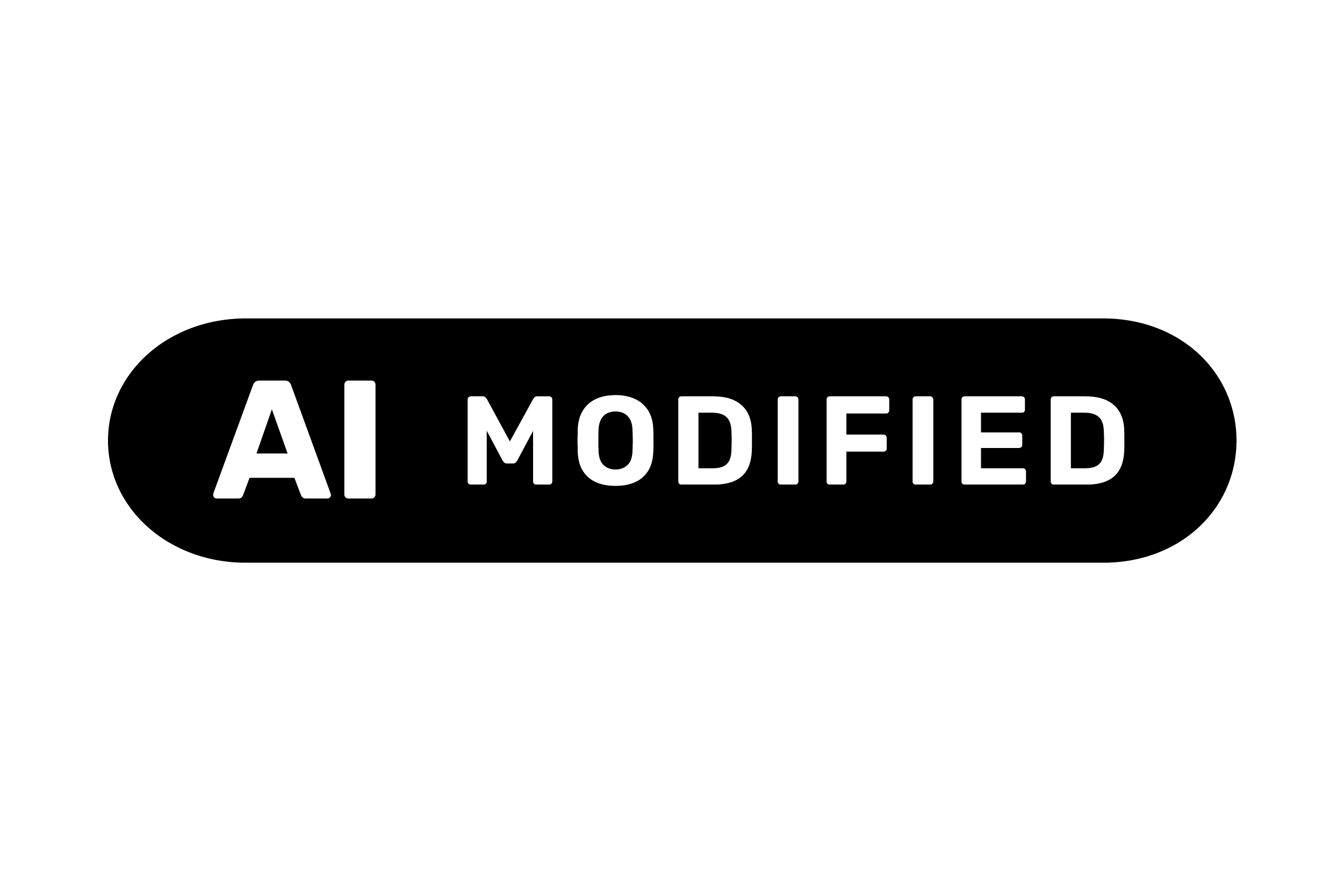
The Icons have 4 variations: black, white, black with 50% transparency and white with 50% transparency. You can download zip files with all the icons in all variations in SVG and PNG formats.
The icons have undergone user-testing, and the results have informed their design. Notably, performance improved across all measures when the basic icon was accompanied by a text label (e.g. modified).
|
Icon |
When to use |
Use case examples |
|
Basic icon
|
When AI was involved in the creation of deep fake content (image, audio, video) or published text or when a custom text label or interactive second layer is implemented |
Deep fake video with the text label “voices generated with” followed by the basic icon |
|
Fully AI-Generated
|
When the entire deep fake content (image, audio, video) or text is fully generated by AI with no human-created elements or human editorial control (apart from prompting) |
Fully AI-generated deep fake videos with politicians or fictional events Fully AI-composed music or art* AI-generated news summaries |
|
Partially AI-Modified
|
When pre-existing, human-made content was partially modified with AI turning it into a deep fake or text on matters of public interest |
A face in an authentic photograph is swapped with a face of a politician using AI Authentic photographs of an empty apartment is furnished using AI |

*May enjoy limited disclosure requirements for artistic, creative, fictional or satirical works
The use of these EU icons is optional, but the labelling requirements under Article 50 AI Act are not. The use of these icons does not establish legal compliance by itself. Deployers remain responsible for ensuring that any disclosure meets the requirements of Article 50 AI Act. Signatories of the Code of Practice on marking and labelling of AI-generated content must duly implement the measures it contains.
How to display the EU icons?
Check section 2 of the Code of Practice on marking and labelling of AI-generated content for the detailed placement specifications that signatories commit to implement. For further guidance, contact the AI Act Service Desk.
Below you can find a summary, not a complete overview, of the rules to display the icons:
- The icon should be clearly perceivable and distinguishable at the latest at the time of first exposure of a natural person to the deep fake or published text.
- The icon should be placed where no intervening overlay elements exist.
- The icon should be directly embedded into the deep fake or published text (except for creative works), unless equivalent alternatives are available such as a user interface overlay. The icon must be visible when content is reshared or downloaded.
Users of the icon are encouraged to implement accessibility measures:
- The icon should be in a clearly visible size.
- Any accompanying label should use plain language and avoid jargon, confusing wording and abbreviations other than “AI”.
- If possible, the icon should be readable by assistive technologies using alt text or ARIA labels indicating that the content is AI-generated or manipulated.
- If the disclosure appears for a limited time, it should remain visible long enough to be read and understood by users with cognitive or processing difficulties.
- If additional information is provided through a second interactive layer, the icon should clearly indicate that further information is available and the second layer content shall be navigable using assistive technologies.
Licence
These icons are made publicly available for everyone to use freely, without the need for attribution to the Commission or the AI Office. However, signatories of the code of practice should use the icon in accordance with its placement specifications. Usage of these icons by non-signatories of the code should not be construed as signaling of their adherence to the code.
EC June 2026
Collegati


Certifico s.r.l.
Sede: Via A. De Curtis, 28 - 06135 Perugia - IT
Sede: Via Madonna Alta 138/A - 06128 Perugia - IT
P. IVA: IT02442650541
Tel. 1: +39 075 599 73 63
Tel. 2: +39 075 599 73 43
Assistenza: 800 14 47 46
www.certifico.com
info@certifico.com
Sede: Via Madonna Alta 138/A - 06128 Perugia - IT
P. IVA: IT02442650541
Tel. 1: +39 075 599 73 63
Tel. 2: +39 075 599 73 43
Assistenza: 800 14 47 46
www.certifico.com
info@certifico.com
Testata editoriale iscritta al n. 22/2024 del registro periodici della cancelleria del Tribunale di Perugia in data 19.11.2024