Featured
EU Guidance for transitioning to Fluorine-Free Firefighting Foams
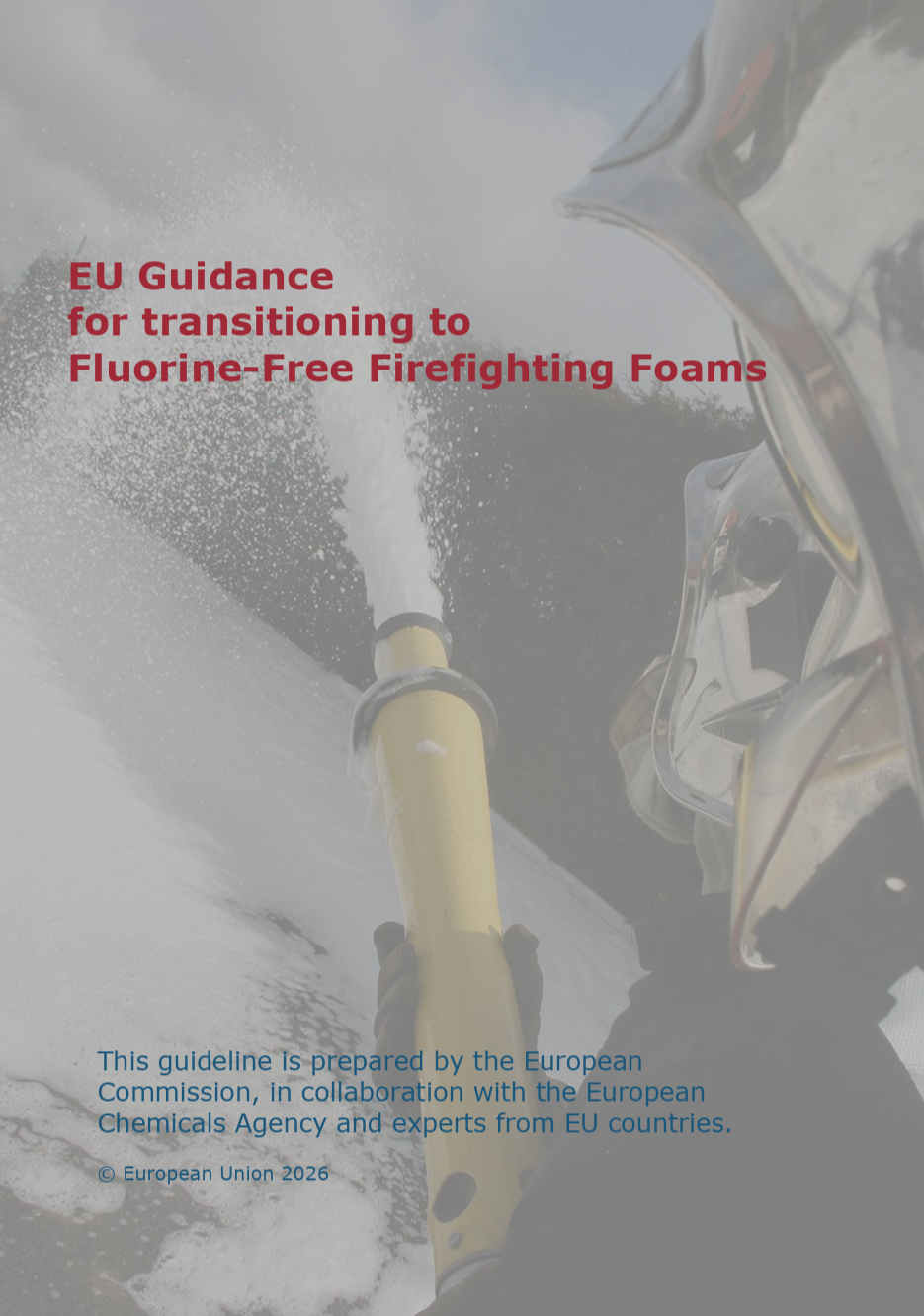
EU Guidance for transitioning to Fluorine-Free Firefighting Foams / 2026
ID 25950 | 08.04.2026 / Attached
EU 2026 - This guideline is prepared by the European Commission, in collaboration with the European Chemicals Agency and experts from EU countries
This guidance aims to support stakeholders in the transition from PFAS-containing firefighting foams to fluorine-free alternatives in line with current (and future) requirements relating to the restriction of perand polyfluoroalkyl substances (PFAS) in firefighting foams under EU regulations. The primary focus of this document is the safe management and best practices relating to the appropriate handling and disposal of PFAS-containing firefighting foams. However, it is also considered that other uses of PFAS in fire-fighting activities could also be important (for example the use of personal protective equipment) potential source of contamination. Therefore, the aspects of waste handling and disposal are also considered in this document.
This document consolidates existing guidance on best practices, technical challenges, and feasible solutions to facilitate compliance with these regulations. It provides information on available fluorinefree alternatives, methodologies for detecting and mitigating PFAS residues, and recommendations for environmentally sound disposal practices. Drawing on international experiences and regulatory insights, this guidance seeks to facilitate a well-informed and seamless transition while maintaining both fire safety and environmental protection standards. Importantly, the guidance is not prescriptive about the methods to achieve compliance but instead offers a range of options and illustrative case studies to support informed decision-making.
__________
Contents
1. About this guideline
1.1 Scope and objectives of this guideline
1.2 Target audience
1.3 User instructions
2. PFAS background
2.1 What are PFAS?
2.2 What is the concern related to PFAS?
2.3 How and why are PFAS used in firefighting foam?
2.4 Portable fire-extinguishers
3. Legal obligations for PFAS in firefighting foam
3.1 Current legislation
3.2 Upcoming legislation
3.3 PFAS-containing firefighting foam management plans
4. Need for action when transitioning to PFAS free systems
4.1 Determine if your firefighting foam(s) contain PFAS
4.2 Review product documentation for PFAS indicators
4.3 Storage and use of existing stocks of PFAS-containing firefighting foams and concentrates
4.4 Disposal of firefighting foam(s) containing PFAS
4.5 Cleaning of firefighting foam infrastructure
4.6 Substitution of PFAS-containing firefighting foam by fluorine-free alternatives
5. Case studies
5.1 Case study 1
5.2 Case study 2
5.3 Case study 3
5.4 Case study 4
5.5 Case study 5
6. Contacts
7. Annex
7.1 Analytical methods suitable for PFAS testing
7.2 Examples of standardized forms for the notification of stockpiles in different European countries
7.3 Typical LoW Codes for firefighting foam-related PFAS wastes
7.4 Overview on PFAS in firefighting foams and relevant regulations
7.5 Overview of the current limit values (as of November 2025) for different water compartments
7.6 Identifiers related to specific PFAS
7.7 Available more specific cleaning protocols from other sources
7.8 Case study examples: hazardous waste assessment
References
[...]
Fonte: ECHA
Collegati
Allegati
|
Descrizione |
Lingua |
Dimensioni |
Downloads |
 |
|
EN |
5293 kB |
21 |