


Circolare n. 8 del 23 luglio 2026

Circolare n. 8 del 23 luglio 2026 / Agg. elenco dei rifiuti in relazione ai rifiuti di batterie / Dal 14.10.2026 istanza telematica nuovi codici EER
ID 26762 | Update 14 Ottpbre 2026 / Allegato
Circolar...


















ID 26611 | 03 Luglio 2026
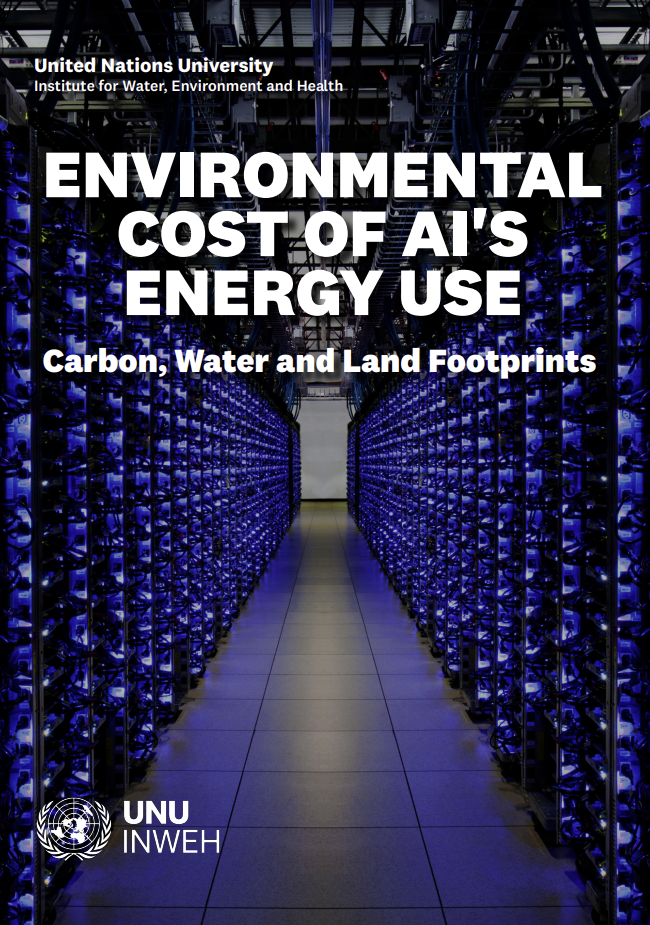
This report, Environmental Cost of Artificial Intelligence: Carbon, Water and Land Footprints, by the United Nations University Institute for Water, Environment and Health (UNU-INWEH) on its 30th anniversary, examines one of the most underexplored consequences of AI’s rapid expansion: the environmental footprints of the energy required to power it. As artificial intelligence becomes embedded in economies, public services, research, communication, and everyday life, it depends on a growing physical infrastructure of data centers, advanced chips, cooling systems, electricity grids, water resources, land, and critical mineral supply chains. The report shows that AI is not only a digital technology, but also a material system with measurable environmental costs.
The report moves beyond a carbon-only lens by quantifying the carbon, water, and land footprints associated with the electricity used to train, deploy, and operate AI systems at scale. Its central finding is that AI’s environmental costs depend not only on how much electricity is used, but also on where that electricity is generated and which energy sources power it. Every kilowatt-hour used by AI carries carbon, water, and land implications, and these footprints do not always move in the same direction: low-carbon electricity is not automatically low-water or low-land. The report also shows that AI’s footprint is shaped by both major infrastructure trends, including the rapid growth of data centers, and everyday use patterns, including model choice, output length, modality, and the growing use of text, image, and video generation.
Importantly, the report frames AI’s environmental footprint as a governance and justice challenge, not only a technical problem. The benefits of AI often flow across borders and sectors, while the environmental burdens of data center siting, electricity demand, water withdrawals, land use, mineral extraction, and e-waste can be concentrated in specific communities and regions. To address these risks, the report calls for a responsible AI ecosystem grounded in transparency, efficiency by design, equity and environmental justice, lifecycle responsibility, global cooperation, and sustainable use. By making AI’s carbon, water, and land footprints visible and comparable, the report provides a practical basis for integrating AI into energy, climate, water, and land-use planning, ensuring that innovation advances without shifting environmental costs onto vulnerable communities.
_________
UNU-INWEH Report: Aczel, M., Chamanara, S., Matin, M., Farsi, A., Marwala, T., Madani, K. (2026). Environmental Cost of AI's Energy Use: Carbon, Water and Land Footprints.
United Nations University Institute for Water, Environment and Health (UNU-INWEH), Richmond Hill, Ontario, Canada
ID 26762 | Update 14 Ottpbre 2026 / Allegato
Circolar...
ID 11442 | Excursus / Documento completo allegato
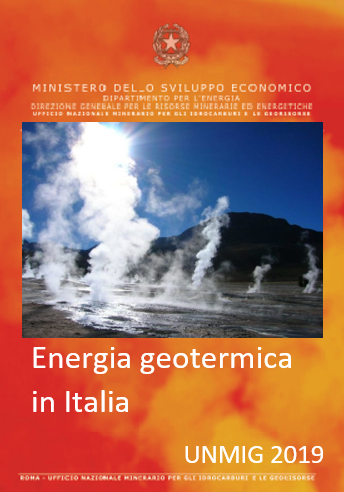
Con il varo del decreto legislativo 11 febbraio 2010, n. 22, vengono in particolar...

ID 23109 | 12.01.2025
Il calcolo della quantificazione della Carbon Footprint di Prodotto (CFP) viene ...
Testata editoriale iscritta al n. 22/2024 del registro periodici della cancelleria del Tribunale di Perugia in data 19.11.2024