

~ 2000 / 2026 ~
// Documenti disponibili n:
49.692
// Documenti scaricati n:
43.053.322
// Newsletter n:
4773

















Due Diligence Guidance for Responsible AI
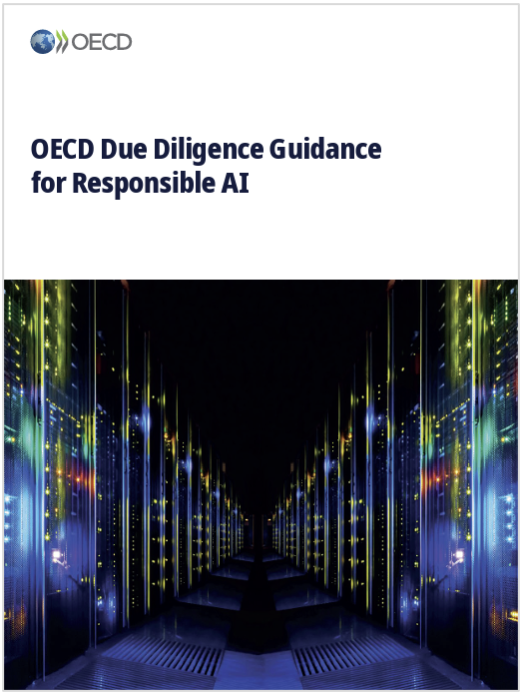
Due Diligence Guidance for Responsible AI / OECD January 2026
ID 25693 | 06.03.2026 / Attached
This guidance aims at supporting enterprises in their implementation of the MNE Guidelines and the AI Principles. This guidance is intended to be used as a tool for multinational enterprises involved in the AI system value chain.
Chapter 1 introduces the concept of RBC due diligence and provides an overview of the broader AI risk management policy landscape. It also describes the target audience and how to use this guidance as a tool to navigate risk management frameworks
The OECD due diligence framework described in the MNE Guidelines and elaborated on in the OECD Due Diligence Guidance for Responsible Business Conduct serves as the foundation for this guidance. The MNE Guidelines and related OECD RBC standards provide voluntary principles for responsible business conduct.
The due diligence framework outlines the following measures:
Step 1: Embed RBC into policies and management systems
Step 2: Identify and assess actual and potential adverse impacts
Step 3: Cease, prevent, and mitigate adverse impacts
Step 4: Track implementation and results of due diligence activities
Step 5: Communicate actions to address impact
Step 6: Provide for or cooperate in remediation when appropriate.
Chapter 2 lays out the RBC due diligence framework and practical implementation examples for enterprises involved in the development and use of AI systems. The due diligence framework presented in this guidance also features a roadmap of related provisions in existing frameworks at the beginning of each step indicating how each step of the due diligence framework is complemented by and relate to relevant provisions from related AI risk management frameworks.
“Practical examples for implementation” are included in each step to further illustrate ways to implement and adapt as needed, the supporting measures and due diligence process.
The practical examples have been selected to fit this context and also draw on leading AI risk management frameworks as well as desk research and consultations with experts. The practical examples are not meant to represent an exhaustive check list. Not every practical example will be appropriate for every situation.
Likewise, enterprises may find additional examples or implementation measures useful in some situations. By meaningfully implementing the recommendations of the existing AI risk management frameworks, including those described in this guidance enterprises can observe many of the expectations of the RBC due diligence approach. In some cases, the RBC framework provides additional clarity and closes gaps in other frameworks particularly with respect to stakeholder engagement and remediation, which are less comprehensively addressed in existing frameworks.
...
add attached
Collegati
Linee guida per le imprese multinazionali sulla condotta responsabile d’impresa
Guida dovere di diligenza (due diligence) condotta responsabile d'impresa
Regolamento (UE) 2024/1689
Guida dovere di diligenza (due diligence) condotta responsabile d'impresa
Regolamento (UE) 2024/1689

Certifico s.r.l.
Sede: Via A. De Curtis, 28 - 06135 Perugia - IT
Sede: Via Madonna Alta 138/A - 06128 Perugia - IT
P. IVA: IT02442650541
Tel. 1: +39 075 599 73 63
Tel. 2: +39 075 599 73 43
Assistenza: 800 14 47 46
www.certifico.com
info@certifico.com
Sede: Via Madonna Alta 138/A - 06128 Perugia - IT
P. IVA: IT02442650541
Tel. 1: +39 075 599 73 63
Tel. 2: +39 075 599 73 43
Assistenza: 800 14 47 46
www.certifico.com
info@certifico.com
Testata editoriale iscritta al n. 22/2024 del registro periodici della cancelleria del Tribunale di Perugia in data 19.11.2024