


Decreto 9 marzo 2023
Decreto 9 marzo 2023
ID 19626 | 15.05.2023
Decreto 9 marzo 2023 Disciplina del regime di condizionalita' e dei requisiti minimi relativi all'uso di prodotti fertilizzanti e fitosanitari e al benessere ...

















ID 17200 | 28.07.2022
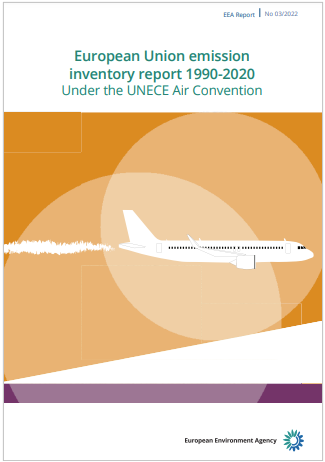
This document is the annual EU emission inventory report under the United Nations Economic Commission for Europe (UNECE) Convention on Long-range Transboundary Air Pollution (Air Convention) (UNECE, 1979). The report and its accompanying data constitute the official submission to the UNECE secretariat from the European Commission (EC) on behalf of the EU as a Party to the UNECE Executive Secretary (Box ES.1). The EEA compiled the report in cooperation with the EU Member States and the EC.
The Air Convention obliges or invites Parties to report emission data for numerous air pollutants:
- main pollutants: nitrogen oxides (NOX), non-methane volatile organic compounds (NMVOCs), sulphur oxides (SOX), ammonia (NH3) and carbon monoxide (CO);
- particulate matter (PM) emitted directly to the air (primary PM):
-- PM with a diameter of 2.5 µm or less (PM2.5; also called fine PM);
-- PM with a diameter of 10 µm or less (PM10);
-- total suspended particulates (TSPs);
-- black carbon (BC), the most strongly light-absorbing component of PM (additional)
- priority heavy metals (HMs): lead (Pb), cadmium (Cd) and mercury (Hg);
- additional HMs: arsenic (As), chromium (Cr), copper (Cu), nickel (Ni), selenium (Se) and zinc (Zn);
- persistent organic pollutants (POPs): polychlorinated dibenzodioxins/dibenzofurans (PCDD/Fs), polycyclic aromatic hydrocarbons (PAHs), hexachlorobenzene (HCB) and polychlorinated biphenyls (PCBs);
- additional reporting of the individual PAHs, benzo(a)pyrene (B(a)P), benzo(b)fluoranthene (B(b)F), benzo(k)fluoranthene (B(k)F) and indeno(1,2,3-cd)pyrene (IP), and the sum of all four.
These pollutants harm human health and the environment. Certain species also contribute to the formation of groundlevel ozone (O3) and secondary PM in the atmosphere. Some pollutants have both an indirect and a direct effect on the sunlight absorbed by the Earth and reflected back to space (radiative forcing) and hence on the climate (EEA, 2014, 2019a).
Collegati
ID 19626 | 15.05.2023
Decreto 9 marzo 2023 Disciplina del regime di condizionalita' e dei requisiti minimi relativi all'uso di prodotti fertilizzanti e fitosanitari e al benessere ...
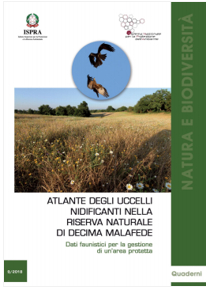
ISPRA Quaderno 9/2018
L’Atlante ornitologico di un’area protetta è uno strumento utile per investigare la distribuzi...
Modulistica per il rinnovo dell’iscrizione all’Albo nella categoria 6 per imprese extra UE.
...
Articolo 1 (Modulistica per il rinnov...
Testata editoriale iscritta al n. 22/2024 del registro periodici della cancelleria del Tribunale di Perugia in data 19.11.2024