

~ 2000 / 2026 ~
// Documenti disponibili n:
48.702
// Documenti scaricati n:
40.914.012
// Newsletter n:
3806


Sicurezza L.

Ambiente

Normazione

Marcat. CE

P. Incendi

Chemicals

Impianti

Macchine

Merci P.

Costruzioni

Trasporti



















| Appunti Merci Pericolose | ||
| Newsletter n. 1889 del 20 Maggio 2026 | ||
 |
||
| Salve Visitatore | ||
IATA 2026 Battery Guidance Document ID 25572 | 18.02.2026 / Attached IATA 2026 Battery Guidance Document Transport of Lithium Metal, Lithium Ion and Sodium Ion Batteries Revised for the 2026 Regulations This document is based on the provisions set out in the 2025-2026 Edition of the ICAO Technical Instructions for the Safe Transport of Dangerous Goods by Air (Technical Instructions) and the 67th Edition (2026) of the IATA Dangerous Goods Regulations (DGR). The provisions of the DGR with respect to lithium and sodium ion batteries may also be found in the IATA Battery Shipping Regulations (BSR) 13th Edition. In addition to the content from the DGR, the BSR also has additional classification flowcharts and detailed packing and documentation examples for these batteries. Reference to “sodium ion battery” in this document, is to be taken as those that meet the testing and classification criteria for UN 3551, Sodium Ion Battery with organic electrolyte set out in the Manual of Tests and Criteria, part III, sub-section 38.3. Definitions Lithium Battery refers to a family of batteries with different chemistries, comprising many types of cathodes and electrolytes. For the purposes of the DGR they are separated into lithium metal batteries and lithium-ion batteries. Lithium metal batteries are generally primary (non-rechargeable) batteries that have lithium metal or lithium compounds as an anode. Also included within lithium metal are lithium alloy batteries. Lithium metal batteries are generally used to power devices such as watches, calculators, cameras, temperature data loggers, car key fobs and defibrillators. Note: Lithium metal batteries packed by themselves (not contained in or packed with equipment) (Packing Instruction 968) are forbidden for transport as cargo on passenger aircraft). - In accordance with Special Provision A201, lithium metal cells or batteries that meet the specified quantity limits may be shipped on a passenger aircraft under an approval issued by the authority of the State of Origin, State of Destination and State of the Operator.
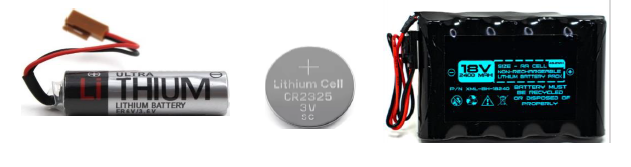
Figure 1 - Example of Lithium Metal Cells and Batteries Lithium-ion batteries (also abbreviated as Li-ion batteries) are secondary (rechargeable) battery where the lithium is only present in an ionic form in the electrolyte. Also included within the category of lithium-ion batteries are lithium polymer batteries. Lithium-ion batteries are generally used to power devices such as mobile telephones, laptop computers, tablets, power tools, hybrid and electric vehicles and e-bikes. Other similar sources of power (power banks, power packs, etc, designed to primarily provide power to another device) are also classified as batteries and not batteries contained in equipment.
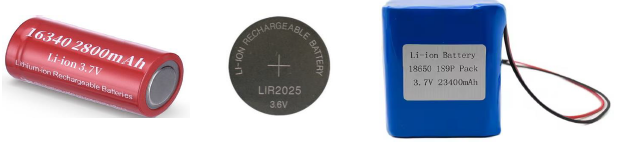
Figure 2 - Example of Lithium Ion Cells and Batteries Note: Lithium ion batteries packed by themselves (Packing Instruction 965 - not contained in or packed with equipment): Sodium ion battery, with organic electrolyte is a rechargeable electrochemical system where the positive and negative electrode are both intercalation or insertion compounds, constructed with no metallic sodium (or sodium alloy) in either electrode and with an organic non-aqueous compound as an electrolyte. Sodium ion cells and batteries with organic electrolyte must be transported as UN 3551 or UN 3552 as appropriate. Note: Sodium-ion batteries with aqueous alkali electrolyte must be transported as UN 2795 Batteries, wet, filled with alkali.
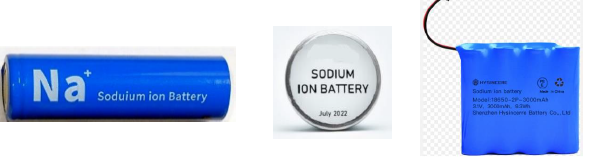
Figure 3 - Example of Sodium Ion Cells and Batteries Aggregate lithium content means the sum of the grams of lithium content contained by the cells comprising a battery. The technical definition of a battery, button cell and cell, as indicated in the UN Manual of Tests and Criteria, is as follows: Cell means a single encased electrochemical unit (one positive and one negative electrode) which exhibits a voltage differential across its two terminals and may contain protective devices. Note: Under the UN Model Regulations, UN Manual of Tests and Criteria and this guidance, to the extent the encased electrochemical unit meets the definition of “cell” herein, it is a “cell”, not a “battery”, regardless of whether the unit is termed a “battery” or a “single cell battery” outside of the UN Model Regulations, the UN Manual of Tests and Criteria and this guidance. Indicated Battery Capacity is to be taken as the indicated remaining usable battery capacity that the user sees via a display gauge or indicator lights. Net quantity, is either: For the purposes of this definition “dangerous goods” means the substance or article as described by the proper shipping name shown in Table 4.2, e.g. for “Fire extinguishers”, the net quantity is the weight of the fire extinguisher (the article). For articles packed with equipment or contained in equipment, the net quantity is the net weight of the article, e.g. for “Lithium-ion batteries contained in equipment”, the net quantity is the net weight of the lithium ion batteries (the article) in the package. Overpack means an enclosure used by a single shipper to contain one or more packages and to form one handling unit for convenience of handling and stowage. Dangerous goods packages contained in the overpack must be properly packed, marked, labelled and in proper condition as required by the IATA Dangerous Goods Regulations. The overpack must not contain packages enclosing different substances which might react dangerously with each other or packages of dangerous goods which require segregation according to Table 9.3.A. - UN 3090, lithium metal batteries prepared in accordance with Section IA or Section IB of PI968, are not permitted in an overpack with packages containing dangerous goods classified in Class 1 other than Division 1.4S, Division 2.1, Class 3, Division 4.1 or Division 5.1. Power bank (power pack, mobile battery, etc.), these are portable devices designed to be able to charge consumer devices such as mobile phones and tablets. For the purposes of this guidance document and the IATA Dangerous Goods Regulations, power banks are to be classified as batteries and must be assigned to UN 3480, lithium ion batteries, or UN 3090, lithium metal batteries, as applicable. Note: When carried by passengers, there are new restrictions on power banks. Further information can be found in the “Passengers travelling with lithium batteries guidance document including small vehicles “. Rated capacity means the capacity, in ampere-hours or milliampere-hours, of a cell or battery as measured by subjecting it to a load, temperature and voltage cut-off point specified by the manufacturer. Note: The following IEC standards provide guidance and methodology for determining the rated capacity: [...] Fonte: IATA Collegati 
|
||
 |
||
|
sono siti di: Se vuoi cancellarti dall'invio della newsletter clicca qui oppure effettua il login al sito ed entra nella Tua Area Riservata, in “Modifica dati” agisci con la spunta sul box di selezione “newsletter”. L'elenco completo di tutte le ns newsletter è qui: Archivio newsletter certifico.com
Testata editoriale iscritta al n. 22/2024 registro periodici Tribunale di Perugia 19.11.2024 |
||
   |
||
 |
||
| Certifico Srl 2000-2026 | VAT IT02442650541 | ||
Testata editoriale iscritta al n. 22/2024 del registro periodici della cancelleria del Tribunale di Perugia in data 19.11.2024